Patients ask me about milk thistle benefits almost every week. Many have heard about milk thistle for liver support from a friend or a store shelf. So let's talk about what this plant is, what the research says, and where it fits in a healthy routine.
Milk thistle is a tall plant with purple flowers and white veins on its leaves. People have used its seeds for centuries. Today you can find it in teas, capsules and blends like our MaxHealth daily multivitamin. Its fruit and vegetable blend lists milk thistle seed. You will also find it in GreenMed Rx super greens powder, which I cover in more detail below.
What Is Silybum Marianum?
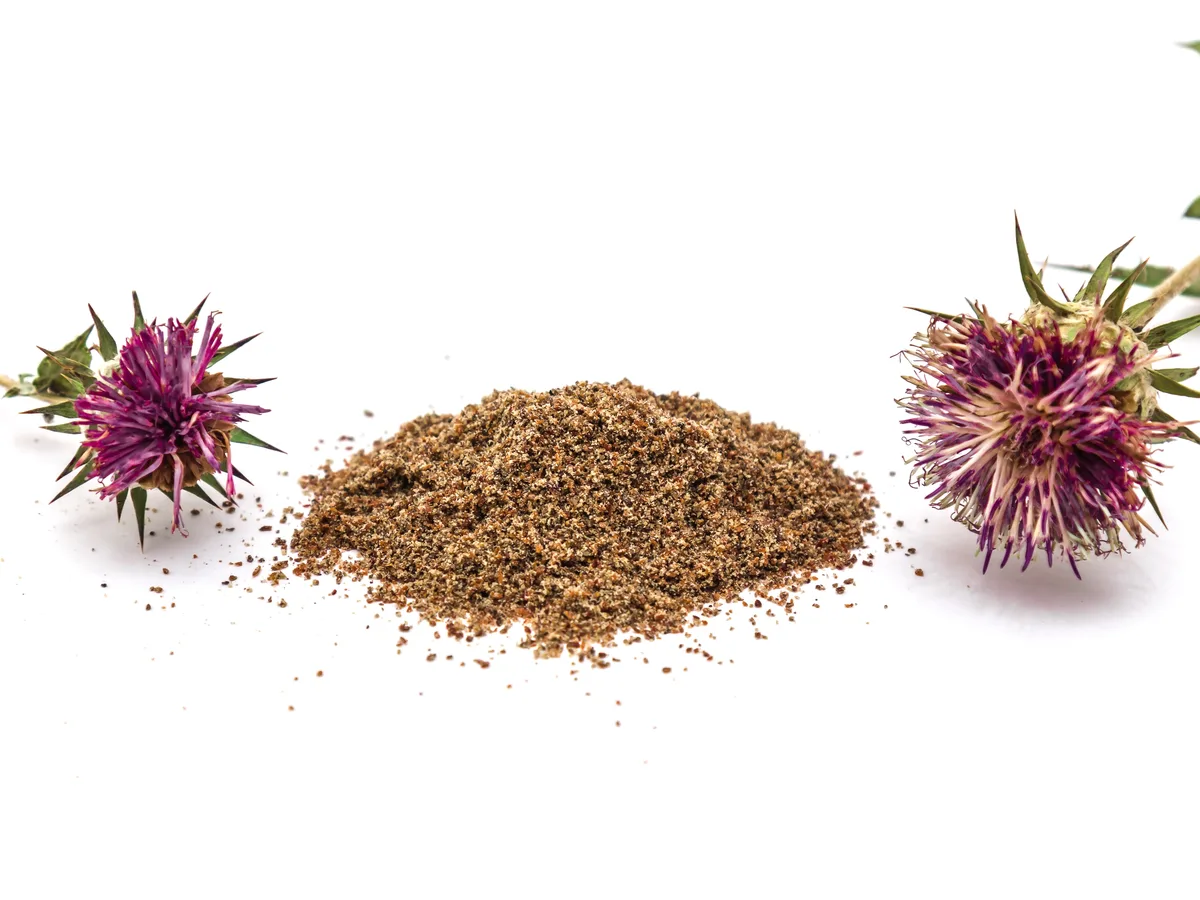
The plant's formal name is Silybum marianum. It grows wild in the Mediterranean and now in many other places. The useful part is the small, hard seed. In fact, most milk thistle benefits trace back to what sits inside that seed.
Healers in Europe used the seeds for liver and gallbladder complaints for a long time. They also used them as a general tonic. Of course, tradition alone does not prove anything. Still, it explains why scientists started to study the plant.
Silymarin: The Active Part of the Seed
The seeds hold a group of plant compounds called silymarin. Silymarin is a mix of flavonolignans. The main one is silybin. When people talk about milk thistle benefits, they are usually talking about silymarin.
A 2015 review in the journal Antioxidants describes silymarin as a natural antioxidant [1]. The review lists several ways it may work in cells. For example, it can trap free radicals in the gut. It also turns on the body's own antioxidant defenses through a pathway called Nrf2. The author calls that pathway the main driver of its antioxidant action [1].
How Milk Thistle Benefits Your Body
Let me walk you through the main milk thistle benefits I discuss with patients. Keep in mind that much of the research is early. So I use careful words here, and you should too.
Antioxidant Milk Thistle Benefits
Your cells make free radicals every day. That is a normal part of turning food into energy. However, too many of them can stress cells over time. Antioxidants help keep that balance in check.
Silymarin may support the body's own antioxidant system [1]. Rather than acting alone, it seems to help your cells make more of their own protective enzymes. This is one of the milk thistle benefits that researchers find most interesting.
Why does this matter? Your liver works hard to handle toxins, and that work creates free radicals. So antioxidant support and liver support often go hand in hand.
Support for a Healthy Inflammatory Response
The same 2015 review notes that silymarin may calm a signal called NF-κB [1]. This signal helps control inflammation in the body. As a result, scientists are looking at silymarin's role in a normal inflammatory response. Still, most of this work is in cells and animals, not people.
Traditional Use for Digestion
Long before lab studies, people used milk thistle seeds after heavy meals. Old herbal texts link the plant with bile flow. Bile is the fluid your liver makes to help you digest fat. So it makes sense that early healers paired the liver and digestion together.
Modern science has not tested every one of these old uses. Even so, they help explain the many milk thistle benefits people still talk about today. I see tradition as a starting point for questions, not as proof.
Milk Thistle for Liver Health
The liver is where milk thistle gets the most attention. Your liver filters blood, makes bile and handles many nutrients. It also breaks down waste so your body can clear it. That is a big job, and it never stops.
So does milk thistle for liver support live up to its name? Here is what one recent review found.
What the Research Shows
A 2021 review in the journal Nutrition pooled eight trials [2]. All of them compared silymarin with a placebo in adults with fatty liver. In those trials, silymarin lowered two liver enzymes, ALT and AST, more than placebo did [2]. This held true whether or not people lost weight.
That said, the authors pointed out flaws in the studies they reviewed. They also said better trials must show whether lower enzymes lead to real changes in the liver itself [2]. I appreciate that honesty. It reminds us that milk thistle benefits for the liver are promising but not settled.
If you have a liver condition, milk thistle is not a do-it-yourself plan. Please see your doctor. Liver health needs lab work and a real exam.
Who May Want to Learn More About Milk Thistle Benefits?
Most people who ask me about milk thistle benefits fall into a few groups. Some want general liver support. Others want more plant nutrients in their day. Then there are people who simply want a gentle herb with a long history.
Here are a few common reasons the topic comes up in my office.
- You eat a lot of processed food and want more plant nutrients.
- You drink alcohol now and then and want to support normal liver function.
- You take several supplements and want to keep things simple.
- You are curious about herbs with a long record of traditional use.
Even so, no herb replaces the basics. Water, fiber, sleep and less alcohol do the heavy lifting for your liver. Milk thistle may add a little support on top of those habits.
I also remind patients that milk thistle benefits are modest. This herb is not a quick fix. Instead, think of it as one more tool that may help your body do what it already does well.
Is Milk Thistle Safe?
Safety is part of any honest talk about milk thistle benefits. For most healthy adults, milk thistle has a good safety record. Some people notice an upset stomach, gas or loose stools. These effects tend to be mild.
However, a few groups should take extra care.
- People with allergies to ragweed, daisies or marigolds, since these plants are cousins.
- Anyone who is pregnant or nursing.
- People who take prescription medicine, including drugs for blood sugar.
- Anyone with a hormone-sensitive health condition.
Talk with your doctor before you start milk thistle if you are pregnant, nursing or taking medication. Your doctor can check for interactions and help you decide if it makes sense for you.
How to Choose the Best Milk Thistle Product
Shoppers often search for the best milk thistle on the shelf. But "best" depends on why you want it. A standalone extract and a whole food blend serve different goals.
Milk Thistle Seed Extract or Powder?
Extracts focus on silymarin. Seed powder gives you the whole seed in a gentler, food-like form. Many people get milk thistle seed as part of a greens or multi-nutrient formula. That way they also get other plant nutrients in the same scoop.
What to Look For on the Label
Want the best milk thistle option for you? Check these points first.
- The plant part used, which should be the seed.
- A clear list of other ingredients.
- A brand that follows good manufacturing practices.
- Suggested use printed on the label.
A blend gives you milk thistle benefits along with many other plant foods. A single extract gives you a stronger focus on silymarin. Neither choice is right for everyone. So think about your goals, your diet and any medicine you take.
Other Nutrients That Support Your Liver
Milk thistle benefits are only one part of the picture. Your liver relies on many nutrients to do its daily work. Here are some of the most important, along with foods that supply them.
NAC (N-acetyl-L-cysteine). NAC is a supplement form of the amino acid cysteine. Your body uses cysteine to make glutathione, one of your liver's main antioxidants. In fact, doctors use NAC in the hospital to protect the liver after an acetaminophen overdose.
Glutamine. Your body can turn glutamine into glutamate, another building block of glutathione. In addition, glutamine is the main fuel for the cells that line your gut. Eggs, meat, beans and tofu also supply it.
Sulfur and MSM. Your liver uses sulfur in one of its normal clearing pathways. For example, garlic, onions, eggs and cabbage-family greens are good food sources. Meanwhile, MSM (methylsulfonylmethane) is a natural sulfur compound sold as a supplement.
Cabbage-family vegetables. Broccoli, cabbage, kale and cauliflower contain natural compounds that support the liver's own clearing enzymes. So aim for a serving most days.
Betaine. This nutrient helps your liver process fat. Beets, spinach and whole grains also supply it.
Fiber. Soluble fiber, like the pectin in apples, binds bile in your gut. Bile is one way your liver carries waste out of the body. For example, oats, beans and fruit are good sources.
Green tea. Green tea is rich in catechins, natural antioxidants such as EGCG. Enjoying green tea as a drink can be part of a liver-friendly diet. However, concentrated green tea extract pills are different. In rare cases, high-dose extracts have been linked to liver injury. So if you have a liver condition, ask your doctor before taking one.
Algae and digestive herbs. Spirulina and chlorella are rich in chlorophyll, protein and antioxidants. In addition, ginger, peppermint and fennel have long been used to support comfortable digestion.
If you prefer a simple daily routine, some formulas combine several of these. For example, our GreenMed Rx super greens powder blends milk thistle seed with NAC, L-glutamine and MSM. It also has cabbage-family greens, beet root, apple pectin, green tea extract, spirulina and chlorella. So you get milk thistle benefits plus other liver-friendly nutrients in one scoop. It may help support your body's natural detox pathways as part of a balanced diet.
Talk with your doctor before adding supplements if you are pregnant, nursing or take medication. After all, herbal blends can include ingredients such as goldenseal or green tea extract that affect some medicines.
Simple Ways to Support Your Liver Every Day
Milk thistle benefits work best alongside healthy daily habits. Your liver responds to how you eat, drink and move. So start with these steps.
- Fill half your plate with vegetables, especially greens and cabbage-family foods.
- Limit alcohol, sugary drinks and fried food.
- Drink water through the day.
- Move your body most days of the week.
- Keep a healthy weight, since extra weight can strain the liver.
You can also browse our liver and gut support products to see other options. Still, food and habits come first. Supplements fill gaps; they do not replace a good plate.
I also tell patients to watch for small changes over time. Do you have more energy after meals? Is your digestion more regular? These daily signs matter. Your doctor can add lab tests to see how your liver is doing. Together, these give a clearer view than any single product.
If you want a full picture of your liver health, a doctor visit is the right step. At Taylor Medical Group's holistic medicine practice, we look at labs, diet and lifestyle together. You can also learn more about our clinic at taylormedicalgroup.net.
My Take on Milk Thistle Benefits
I see milk thistle as a helpful herb with real science behind it. Still, the science behind milk thistle benefits is young. Silymarin may support your body's antioxidant defenses and normal liver function. Yet it works best as one small piece of a healthy life.
I also like that milk thistle benefits are easy to fit into a daily routine. You can get it in a greens powder, a multivitamin or a stand-alone product. That gives you choices. In turn, you can pick the form that suits your habits and your budget.
When you weigh milk thistle benefits, ask yourself what you hope to gain. Then talk it over with your doctor, especially if you take other medicine. That way you can make a choice that fits your body and your goals.
References
- Surai PF. Silymarin as a natural antioxidant: an overview of the current evidence and perspectives. Antioxidants (Basel). 2015;4(1):204-247. PubMed
- Kalopitas G, Antza C, Doundoulakis I, Siargkas A, Kouroumalis E, Germanidis G, Samara M, Chourdakis M. Impact of silymarin in individuals with nonalcoholic fatty liver disease: a systematic review and meta-analysis. Nutrition. 2021;83:111092. PubMed
Questions about which formula fits you?
Call 678-443-4099 or Chat Now to find out more information and pricing on our supplements.
Visit www.taylormedicalgroup.net to find out about holistic doctors that can improve your health.
The information in this article is provided for educational purposes only and does not constitute medical advice. These statements have not been evaluated by the Food and Drug Administration. Any products mentioned are not intended to diagnose, treat, cure, or prevent any disease. Always consult your qualified healthcare provider before making changes to your health regimen. Full Medical Disclaimer
Dr. Ava Bell-Taylor, M.D.
Board-Certified Psychiatrist & Functional Medicine Physician
Dr. Ava Bell-Taylor is a board-certified psychiatrist and functional medicine physician with a Family Practice background, specializing in hormone balance, reproductive psychiatry, adrenal health, and the mind-body connection. She is the co-founder of Taylor MD Formulations and Taylor Medical Group in Atlanta, Georgia.
Learn more about Dr. Bell-Taylor