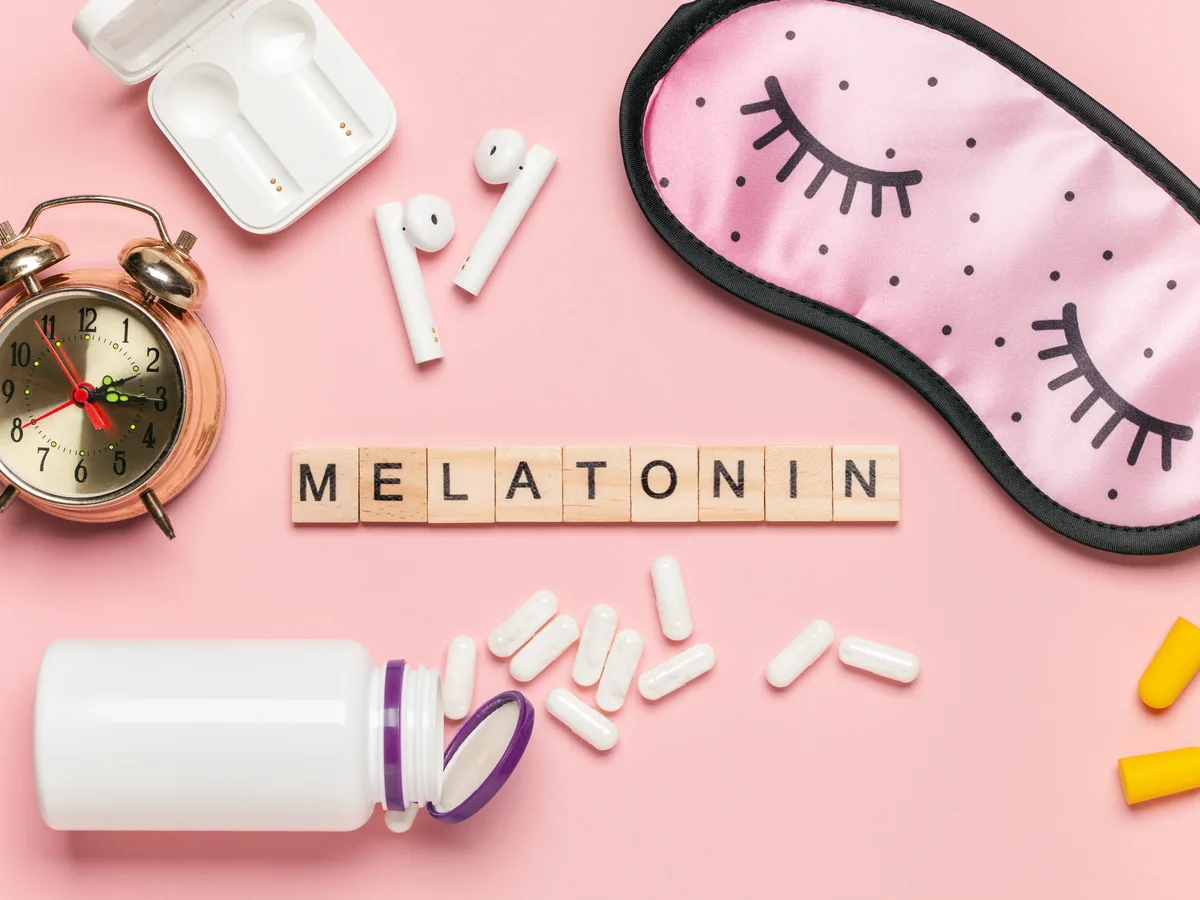
Patients ask me about time release melatonin almost every week. Some fall asleep fine but wake at 2 a.m. Others have tried liquid melatonin and wonder if a slow form would work better. Below, I explain how each form behaves, who may benefit, and how our SleepEasy nighttime formula compares.
Melatonin is one of the most common sleep aids in America. Yet few people know that the form they choose changes how it acts. And some readers want alternatives to melatonin, so I cover those too. Let's start with the basics.
What Melatonin Does in Your Body
Your pineal gland makes melatonin. It is a tiny gland deep in your brain. It acts like a clock signal. When light fades in the evening, your brain starts releasing it. Levels climb through the night and peak in the early morning hours. Then morning light shuts production down.
Melatonin does not knock you out like a sleeping pill. Instead, it tells your body that night has arrived. Your core temperature drops, and you start to feel sleepy.
Many things can blunt this signal. Bright screens at night, late meals, shift work and travel across time zones all play a part. Age matters too, since melatonin output tends to fall as we get older. That is one reason older adults often sleep more lightly.
What Is Time Release Melatonin?
Time release melatonin is a tablet or capsule built to release melatonin slowly. Instead of one quick burst, it lets out small amounts over several hours. You may also see it called extended-release, slow-release or prolonged-release melatonin.
The goal is to copy your natural pattern. Your own melatonin does not spike and vanish. It stays up for much of the night. So time release melatonin tries to keep levels steady until the early morning.
Regular melatonin, often called immediate-release, works differently. It enters your blood fast and peaks within about an hour. Then your body clears it quickly. That quick rise can help you fall asleep, but levels may fade before morning.
How Liquid Melatonin Compares
Liquid melatonin is another fast form. It comes as drops or a small dose you swallow. Because it skips the tablet step, it absorbs quickly. Some people like that they can adjust the amount drop by drop. It also helps people who struggle to swallow pills.
However, the liquid form does not last longer than a tablet. It acts much like immediate-release melatonin. So it suits trouble falling asleep more than trouble staying asleep.
Who May Benefit From Time Release Melatonin
The right form depends on your sleep pattern. Here is how I think about it with patients.
Trouble Staying Asleep
Do you wake in the middle of the night? Then time release melatonin may be a better match. The slow release keeps the signal going later into the night. Many of my patients in midlife describe exactly this pattern.
Trouble Falling Asleep
If you lie awake for an hour before sleep comes, a fast form may fit better. Immediate-release melatonin or the liquid kind reaches its peak sooner. That can help shorten the wait.
Older Adults
Since melatonin output declines with age, older adults are the group most studied with time release melatonin. A 2007 trial in Current Medical Research and Opinion looked at 354 adults aged 55 to 80 with insomnia [1]. They took 2 mg of prolonged-release melatonin or a placebo each night for three weeks [1].
The study measured sleep quality and morning alertness together. More people met that goal with melatonin: 26% versus 15% [1]. They also fell asleep faster than the placebo group [1]. In addition, their quality-of-life scores rose more [1].
That study tested a prescription-style prolonged-release tablet, not a store product. So it tells us about the slow form, not about any one brand.
Time Release Melatonin vs. Regular Melatonin: A Quick Guide
Here is a simple way to compare the two.
- Speed: Regular and liquid forms act fast. Time release melatonin builds more slowly.
- Length: Regular forms fade within a few hours. The slow form lasts longer into the night.
- Best match: Fast forms suit trouble falling asleep. The slow form suits waking up at night.
- Morning feel: Some people feel groggy with a slow form if they take it late. Others feel groggy with any high dose.
Neither form is better for everyone. Also, more is not better with melatonin. Many people do well with lower amounts. If one form leaves you groggy, talk with your doctor about the amount or the timing.
How SleepEasy Fits With Melatonin for Sleep
I want to be clear about our own product. SleepEasy is not a time release melatonin. Its melatonin is the regular kind, at 2 mg per serving. Instead of relying on melatonin alone, it pairs it with other nutrients.
Each two-capsule serving of SleepEasy provides:
- Melatonin, 2 mg.
- Magnesium (as magnesium oxide and citrate), 200 mg.
- 5-HTP, 50 mg.
- A 700 mg blend of L-theanine, GABA, phellodendron root and Mucuna pruriens seed extract.
Your body uses 5-HTP to make serotonin, and serotonin is the building block for melatonin. Magnesium helps nerves and muscles relax. L-theanine is the calming amino acid found in tea.
SleepEasy may help support restful sleep and a normal sleep-wake cycle. If your main issue is falling asleep, its fast melatonin may suit you. But if you mostly wake in the night, ask your doctor whether time release melatonin makes more sense for you.
Vitamin B6 also plays a part, because your body needs it to turn 5-HTP into serotonin. Our Stress B Complex provides B6 along with the other B vitamins. You can browse more options in our brain and cognitive health collection.
How to Take Time Release Melatonin Wisely
A few simple rules make a big difference.
Start low. Many people do well with a small amount. Higher doses do not always work better. In fact, they may leave you groggy the next morning.
Time it well. Most people take time release melatonin shortly before bed. Taking it too late, such as at 2 a.m., can push the effect into your morning. So follow the label, and ask your doctor about timing.
Be consistent. Melatonin works with your body clock. So take it at about the same time each night. Your clock likes a steady routine.
Don't stack products. Check every label before bed. Some sleep blends, gummies and teas also contain melatonin. Taking time release melatonin on top of them can add up fast.
Give it a fair trial. Keep a simple sleep diary for two weeks. Note when you went to bed, when you woke and how you felt. Then share it with your doctor.
What About Jet Lag and Shift Work?
Melatonin is also used to help shift the body clock. For jet lag, a fast form taken at the new bedtime is the usual choice. Time release melatonin is less often used for travel. Night-shift workers face a harder problem, because they sleep against their natural rhythm. In both cases, light timing matters as much as melatonin. So ask your doctor for a plan that fits your schedule.
Safety Tips Before You Try Any Melatonin
Melatonin is a hormone, so I take it seriously. Most adults tolerate it well. Still, side effects can happen. The most common are daytime sleepiness, headache, dizziness and nausea. Some people notice vivid dreams.
Keep these points in mind:
- Talk with your doctor first if you are pregnant or nursing.
- Ask your doctor if you take blood thinners, blood pressure drugs, diabetes drugs, sedatives or drugs for your immune system.
- Because SleepEasy has 5-HTP, check with your doctor if you take an antidepressant or other mood medication.
- Do not drive or drink alcohol after taking melatonin.
- Ask a pediatrician before giving melatonin to a child.
Also, do not crush or split time release melatonin unless the label allows it. Crushing can turn a slow tablet into a fast one.
Other Nutrients That May Help Support Sleep
Melatonin is only one piece of good sleep. Magnesium, found in pumpkin seeds, spinach and almonds, may help support muscle relaxation. L-theanine from green tea may help you feel calm without feeling groggy. GABA is a calming messenger your brain makes on its own. 5-HTP is a building block your body uses to make serotonin, and later melatonin. Our SleepEasy formula pairs a low dose of melatonin with these nutrients. Still, check with your doctor first, especially if you take an antidepressant.
Habits and Alternatives to Melatonin for Sleep
A supplement works best when your habits send the same message. These habits are also the simplest alternatives to melatonin. So dim the lights an hour before bed. Put your phone in another room if you can. Keep your bedroom cool and dark.
Get bright light in the morning, ideally outside. Morning light helps set your clock so melatonin rises on time that night. Then try to keep the same wake time every day, even on weekends.
Watch caffeine after noon and heavy meals late at night. Both can make it harder for time release melatonin, or any sleep aid, to do its job.
When to See a Doctor About Sleep
Poor sleep is common, but it is not something to ignore. See your doctor if you snore loudly, gasp at night or feel sleepy all day. These can be signs of sleep apnea, which melatonin will not fix.
You should also get help if sleep trouble lasts more than a few weeks. Stress hormones, thyroid problems and menopause can all disturb sleep. A full workup looks at those pieces together.
That is how we work at our clinic. You can read about our approach on the Drs. Eldred and Ava Taylor page. Or visit Taylor Medical Group to learn more.
References
- Wade AG, Ford I, Crawford G, McMahon AD, Nir T, Laudon M, Zisapel N. Efficacy of prolonged release melatonin in insomnia patients aged 55-80 years: quality of sleep and next-day alertness outcomes. Current Medical Research and Opinion. 2007;23:2597-2605. PubMed
Questions about which formula fits you?
Call 678-443-4099 or Chat Now to find out more information and pricing on our supplements.
Visit www.taylormedicalgroup.net to find out about holistic doctors that can improve your health.
The information in this article is provided for educational purposes only and does not constitute medical advice. These statements have not been evaluated by the Food and Drug Administration. Any products mentioned are not intended to diagnose, treat, cure, or prevent any disease. Always consult your qualified healthcare provider before making changes to your health regimen. Full Medical Disclaimer
Dr. Ava Bell-Taylor, M.D.
Board-Certified Psychiatrist & Functional Medicine Physician
Dr. Ava Bell-Taylor is a board-certified psychiatrist and functional medicine physician with a Family Practice background, specializing in hormone balance, reproductive psychiatry, adrenal health, and the mind-body connection. She is the co-founder of Taylor MD Formulations and Taylor Medical Group in Atlanta, Georgia.
Learn more about Dr. Bell-Taylor