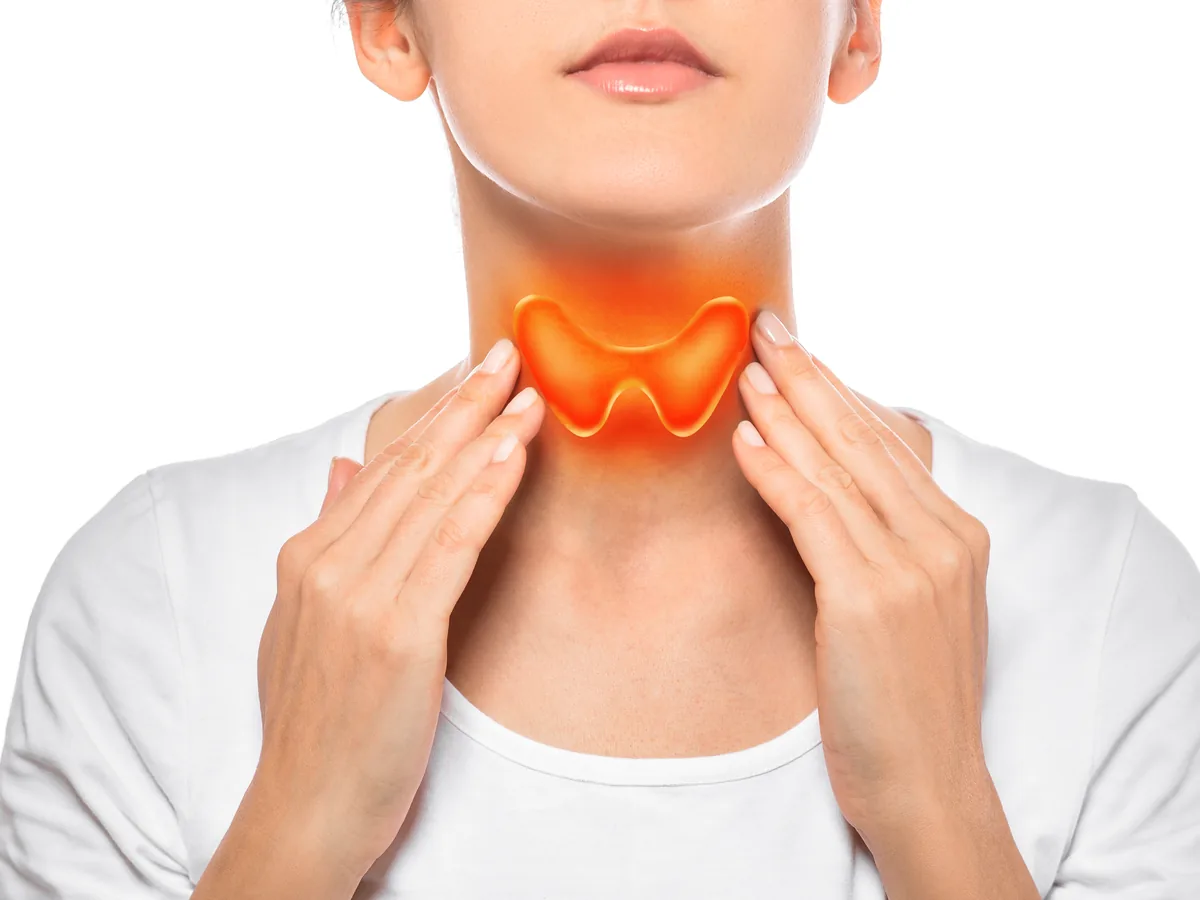
Thyroid gland function affects almost every cell in your body. Many patients ask me, "What does thyroid do, and why does mine matter so much?" It is a great question. Your thyroid sets the pace for your energy, your weight and even your mood.
In this post, I will explain how your thyroid works and what it needs to stay healthy. I will also share a few signs that mean it is time for a checkup. If you want extra nutrient support, our Thyroid Support formula with iodine and selenium may help support normal thyroid function.
What Does Thyroid Do in the Body?
Your thyroid is a small, butterfly-shaped gland at the front of your neck. It sits just below your Adam's apple. Though small, it has a big job. It makes hormones that tell your cells how fast to use energy.
Think of your thyroid as a thermostat. When it runs well, your body stays warm and steady. When it runs too fast or too slow, you feel it. So when patients ask what does thyroid do, I say it sets the speed of your metabolism.
Thyroid Gland Function in Simple Terms
Thyroid gland function comes down to three steps. First, the gland pulls iodine from your blood. Next, it uses that iodine to build hormones. Then it stores those hormones and releases them as your body needs them.
Your brain keeps watch over the whole process. A part of the brain called the pituitary sends out TSH, or thyroid-stimulating hormone. TSH tells your thyroid to speed up or slow down. That is why TSH is often the first lab test doctors order.
How Each Thyroid Hormone Works
Your thyroid makes two main hormones, T4 and T3. Each thyroid hormone carries iodine atoms. T4 has four, and T3 has three. That is where their names come from.
T4: The Storage Form
Most of what your thyroid releases is T4. It travels through your blood and acts like a reserve. Your body converts T4 into T3 when it needs it. This step happens in the liver, the kidneys and other tissues.
T3: The Active Form
T3 is the form your cells use most. It enters cells and tells them how much energy to burn. As a result, T3 affects your heart rate, body heat, digestion and more. Good thyroid gland function depends on both making T4 and turning it into T3.
Why Thyroid Gland Function Matters for Your Health
Thyroid hormones reach almost every organ. So small changes can have wide effects. Healthy thyroid gland function supports many things you may not link to your neck.
- Energy levels through the day.
- Body temperature and how well you handle cold.
- Heart rate and steady heart rhythm.
- Digestion and regular bowel habits.
- Healthy skin, hair and nails.
- Mood, focus and memory.
- Menstrual cycles and fertility.
When thyroid gland function slips, even a little, you may notice it in several of these areas at once. Patients often tell me they just do not feel like themselves. In other words, your thyroid touches your whole life. That is why I take thyroid symptoms seriously in my practice. I never brush them off as only stress.
Nutrients That Support Healthy Thyroid Gland Function
Your thyroid cannot do its job without the right raw materials. Food comes first. Still, many people fall short on one or more of these nutrients.
Iodine
Iodine is the building block of every thyroid hormone. A 2021 review in the journal Nutrients explains the steps [1]. Thyroid cells pull iodide from the blood through a special pump. An enzyme called thyroid peroxidase then attaches iodine to a protein called thyroglobulin [1]. These pieces join to form T4 and T3.
The same review lists the main food sources of iodine [1]. These include sea fish, seaweed, milk, eggs and iodized salt. It also notes that too much seaweed has been tied to thyroid problems [1]. So more is not always better. Balance matters.
Selenium
Selenium is a trace mineral your thyroid uses in large amounts. The enzymes that turn T4 into active T3 need selenium. Other selenium enzymes help shield thyroid cells from wear and tear. Brazil nuts, fish, eggs and whole grains are good food sources.
In fact, the thyroid holds more selenium per gram than most other tissues. That tells you how much the gland relies on it. Still, selenium is a mineral where balance matters. Too much can cause its own problems, so stick to the amounts on a label or your doctor's advice.
Zinc, Iron and Tyrosine
Zinc and iron also play roles in thyroid gland function. Iron helps the enzyme that builds thyroid hormones. Meanwhile, tyrosine is an amino acid that forms the backbone of T4 and T3. Your body makes tyrosine from protein in your diet.
Thyroid Support combines iodine, selenium, zinc and magnesium. It also includes L-tyrosine, kelp, bladderwrack, ashwagandha and schisandra in a blend. Together, these ingredients may help support normal thyroid gland function. For broader daily coverage, our MaxHealth multivitamin also provides iodine, selenium and zinc.
Signs Your Thyroid May Need a Closer Look
Thyroid changes often come on slowly. As a result, many people blame the symptoms on age or a busy life. Here are signs that mean you should talk with your doctor.
When Your Thyroid Runs Slow
- Feeling tired even after a full night of sleep.
- Feeling cold when others feel fine.
- Weight gain without a clear reason.
- Dry skin, thinning hair or brittle nails.
- Constipation or a low, flat mood.
When Your Thyroid Runs Fast
- A racing or pounding heartbeat.
- Feeling shaky, anxious or restless.
- Weight loss you did not plan.
- Feeling hot and sweating more than usual.
- Trouble sleeping.
These signs can have many causes, not just your thyroid. That is why testing matters. Please do not guess at a thyroid problem or try to fix it on your own.
Thyroid Gland Function Through Life's Stages
Your thyroid needs change as you age. They also shift with big life events. Women, in particular, may notice thyroid changes at certain times.
Pregnancy and After Birth
During pregnancy, the body needs more iodine and more thyroid hormones. The baby depends on the mother's supply early on. After birth, some women have short-term thyroid swings. So new mothers who feel off should mention it to their doctor.
Midlife and Beyond
Thyroid problems become more common with age, especially in women. The symptoms can look a lot like menopause. Fatigue, weight gain and mood changes show up in both. That overlap is one more reason to test rather than guess. Healthy thyroid gland function in midlife helps you keep your energy and focus.
Testing Thyroid Gland Function
A simple blood test is the best way to check your thyroid. Most doctors start with TSH. However, TSH alone does not tell the whole story. In my practice, I also like to look at free T4, free T3 and thyroid antibodies.
Why the full panel? Some people make enough T4 but do not convert it well to T3. Others have antibodies years before their levels change. A complete picture helps us see thyroid gland function more clearly.
Before your visit, write down your symptoms and when they started. Bring a list of every supplement and medicine you take. Some supplements, such as biotin, can throw off thyroid lab results. Your doctor may ask you to pause them for a few days before a blood draw. Then ask how your results compare with past tests, not just the normal range.
If you want a full thyroid workup, our team can help. Learn about our approach at Taylor Medical Group's holistic medicine practice, or visit taylormedicalgroup.net.
Nutrients That May Help Support Thyroid Gland Function
Your thyroid depends on a handful of nutrients. Iodine is a building block of the hormones your thyroid makes, and seafood, dairy and iodized salt supply it. Selenium also matters, since your thyroid holds more of it than most organs. Brazil nuts, tuna and eggs are good sources. Zinc, found in oysters, beef and pumpkin seeds, helps your body use these hormones. L-tyrosine is an amino acid your body pairs with iodine, and chicken and cheese supply it. Our Thyroid Support formula brings several of these together. Still, talk with your doctor first, especially if you take thyroid medication.
Daily Habits for a Healthy Thyroid
Good habits support thyroid gland function every day. None of them are fancy. Yet they make a real difference over time.
- Eat a mix of fish, eggs, nuts, beans and colorful vegetables.
- Use iodized salt in cooking unless your doctor advises otherwise.
- Manage stress, since stress hormones can affect your thyroid.
- Sleep seven to nine hours a night.
- Move your body most days of the week.
Your thyroid also works closely with your other hormones. You can explore more options in our hormone health collection.
A word of caution about supplements. Thyroid Support contains iodine from kelp and bladderwrack. If you have a thyroid condition or take thyroid medicine, talk with your doctor first. The same goes if you are pregnant, nursing or take any other medication. Iodine and thyroid medicine both need careful dosing, so your doctor should guide you.
Supplements are a support, not a substitute. Thyroid gland function rests on food, sleep, stress care and good medical follow-up. When those pieces are in place, the right nutrients may help your thyroid do its daily work. Ask your doctor which ones fit your labs and your health history.
Your thyroid works quietly in the background, but it shapes how you feel each day. Pay attention to the signals your body sends. Then partner with a doctor who will look at the whole picture with you.
References
- Sorrenti S, Baldini E, Pironi D, Lauro A, D'Orazi V, Tartaglia F, Tripodi D, Lori E, Gagliardi F, et al. Iodine: its role in thyroid hormone biosynthesis and beyond. Nutrients. 2021;13(12):4469. Nutrients (journal page)
Questions about which formula fits you?
Call 678-443-4099 or Chat Now to find out more information and pricing on our supplements.
Visit www.taylormedicalgroup.net to find out about holistic doctors that can improve your health.
The information in this article is provided for educational purposes only and does not constitute medical advice. These statements have not been evaluated by the Food and Drug Administration. Any products mentioned are not intended to diagnose, treat, cure, or prevent any disease. Always consult your qualified healthcare provider before making changes to your health regimen. Full Medical Disclaimer
Dr. Ava Bell-Taylor, M.D.
Board-Certified Psychiatrist & Functional Medicine Physician
Dr. Ava Bell-Taylor is a board-certified psychiatrist and functional medicine physician with a Family Practice background, specializing in hormone balance, reproductive psychiatry, adrenal health, and the mind-body connection. She is the co-founder of Taylor MD Formulations and Taylor Medical Group in Atlanta, Georgia.
Learn more about Dr. Bell-Taylor