When stress runs high, food is one of the first places I look. Cortisol reducing foods will not erase a hard week. Still, the right meals may help keep your cortisol level steadier from morning to night. This guide covers what to eat and what to limit. It also covers where our AdrenaCare adrenal support formula may fit.
Cortisol is not the enemy. Your body needs it. Cortisol reducing foods simply help it stay in balance. The problem starts when stress never lets up and cortisol stays switched on. So let's look at how your plate can work with your stress system instead of against it.
What Cortisol Does and Why Your Cortisol Level Matters
Cortisol is a hormone made by your adrenal glands. These two small glands sit on top of your kidneys. Your brain tells them when to release cortisol, and they answer fast.
A healthy cortisol level follows a daily rhythm. It rises in the early morning to help you wake up. Then it slowly falls through the day, so it is lowest at bedtime. That rhythm helps control blood sugar, blood pressure, energy and sleep.
Stress changes the pattern. A deadline, a sick parent or poor sleep all tell your brain to call for more cortisol. In short bursts, that is helpful. But when stress lasts for months, cortisol can stay high when it should drop.
Many of my patients describe the same signs. They feel tired but wired at night. They crave sugar in the afternoon. They wake at 3 a.m. and cannot fall back asleep. Belly weight may creep up too. These signs have many causes, so they deserve a real workup. Still, food is a simple place to start.
How Cortisol Reducing Foods Work in Your Body
No single food flips a switch on your adrenal glands. Instead, cortisol reducing foods work by taking stress off your body in small, steady ways.
First, they help steady your blood sugar. When blood sugar drops too low, your body releases cortisol to bring it back up. So meals that keep blood sugar even may ask less of your stress system.
Second, they supply nutrients your adrenal glands use. Your adrenal glands hold a lot of vitamin C. Your body also uses B vitamins and magnesium to run its stress response. When those run short, stress can feel harder to handle.
Third, many cortisol reducing foods calm inflammation. Long-term stress and inflammation tend to feed each other. Foods rich in omega-3 fats, fiber and plant compounds may help break that loop.
Finally, good food supports good sleep. And sleep is one of the strongest tools you have for a healthy cortisol rhythm.
Keep in mind that food is only one layer. Some people also ask about cortisol triggering foods, and we will cover those below. Others need high cortisol treatment from a doctor because a medical problem drives their numbers. Cortisol reducing foods help in every case, but they are the base, not the whole plan.
The Best Cortisol Reducing Foods to Add Each Day
Here are the groups I suggest most often. You do not need all of them at every meal. Aim to work a few into each day.
Complex Carbs: Steady Foods for Stress
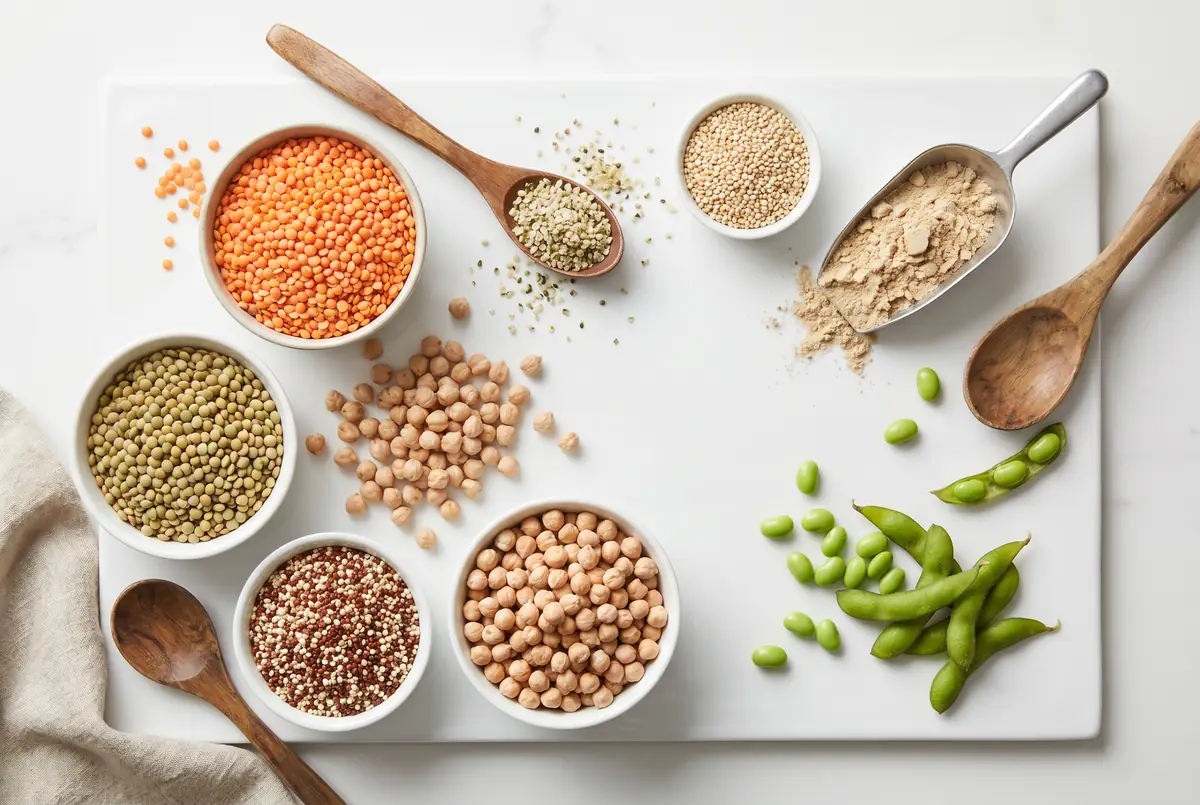
Oats, sweet potatoes, beans, lentils, brown rice and quinoa release sugar slowly. That steady flow helps you avoid the crash that can trigger a cortisol surge. Fiber also feeds your gut bacteria, which talk to your brain in both directions.
Among cortisol reducing foods, these are the easiest to love. A small serving at dinner may also help some people sleep. So I rarely tell stressed patients to cut carbs to zero.
Omega-3 Fish, Classic Anti-Stress Foods
Salmon, sardines, mackerel and trout are rich in the omega-3 fats EPA and DHA. These fats help build healthy cell walls in the brain. They also support a normal inflammatory response. Try to eat fatty fish two or three times a week.
No fish in your diet? Then ask your doctor about a fish oil like our Mega EPA/DHA omega-3 softgels. Each two-softgel serving provides 800 mg of EPA and 600 mg of DHA.
Magnesium-Rich Greens, Nuts and Seeds
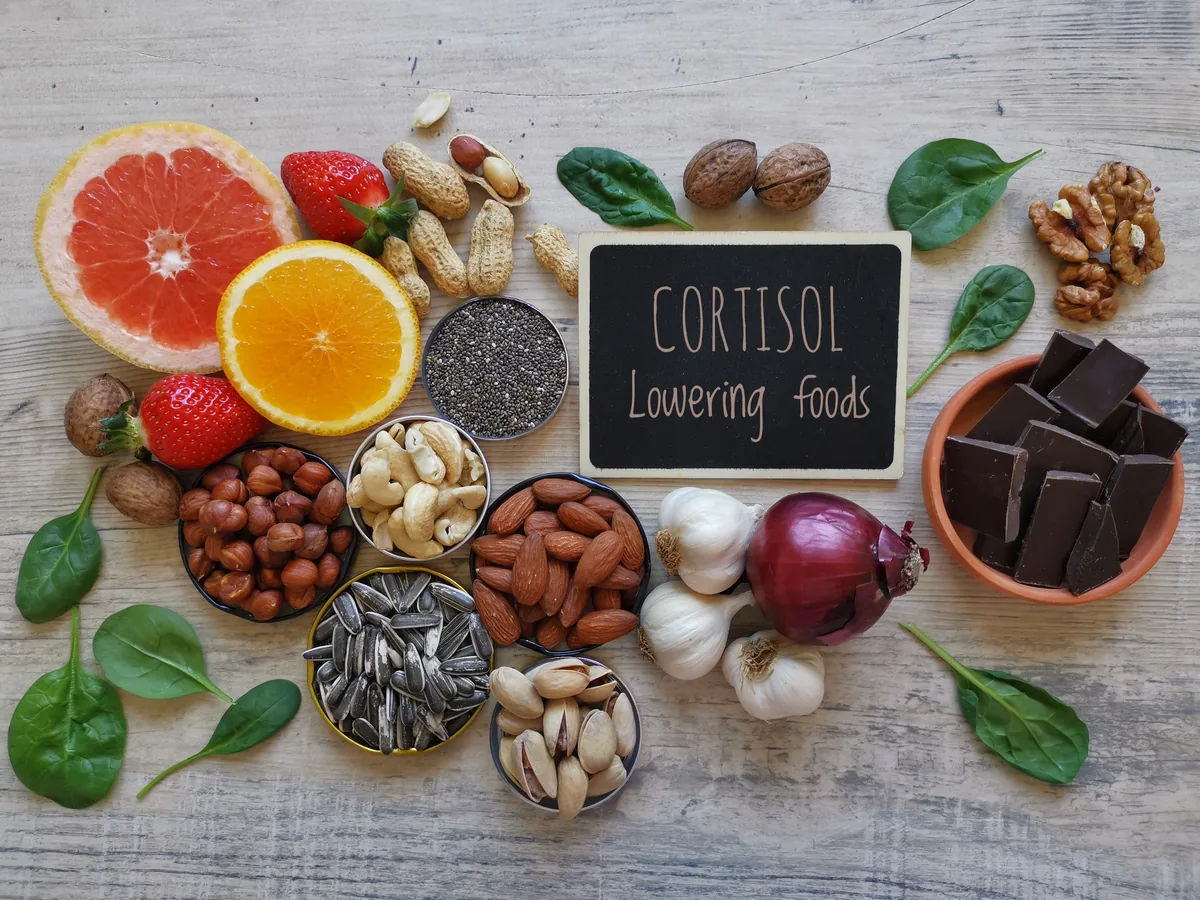
Spinach, Swiss chard, pumpkin seeds, almonds, cashews and black beans are good sources of magnesium. Your nerves and muscles rely on magnesium to relax. Yet many adults do not get enough from food. These cortisol reducing foods are easy to add to a salad or a snack bowl.
Vitamin C Foods
Bell peppers, oranges and kiwi are rich in vitamin C. So are strawberries and broccoli. These cortisol reducing foods are easy to find in any store. Because your adrenal glands store so much of this vitamin, I like to see it on the plate every day. Raw or lightly cooked works best, since heat breaks down some vitamin C.
Fermented Foods for Your Gut
Plain yogurt, kefir, sauerkraut and kimchi bring helpful bacteria to your gut. Your gut and brain stay in constant contact. So a healthy gut may support a calmer stress response.
Green Tea and a Little Dark Chocolate
Green tea contains L-theanine. This amino acid is known for a calm but alert feeling. It does have caffeine, so keep it to the morning. A square or two of dark chocolate also gives you magnesium and plant compounds. Pick 70% cacao or higher, and keep the portion small.
Cortisol Triggering Foods and Habits to Limit
Some choices push cortisol higher. Cortisol reducing foods help most when you also ease up on cortisol triggering foods.
Caffeine is the big one. Coffee raises cortisol for a while after you drink it. One cup in the morning is fine for most people. But several cups, or coffee late in the day, can keep your stress system on alert.
Sugar and refined flour cause fast spikes and drops in blood sugar. They are the opposite of cortisol reducing foods. Each drop can call for more cortisol. So sweets, white bread and sugary drinks work against your efforts.
Alcohol may feel relaxing at first. Yet it often disturbs sleep in the second half of the night. Poor sleep then sets up a rough cortisol pattern for the next day.
Skipping meals matters too. Long gaps without food can drop blood sugar and nudge cortisol up. Instead, eat regular meals with protein, fiber and healthy fat.
Where Supplements May Fit
Food comes first in my practice, and cortisol reducing foods are my starting point. Still, many patients ask me about supplements for stress. My answer is that a supplement can add support, but it cannot replace good meals, sleep and stress care.
Ashwagandha is one herb with real research behind it. A 2019 trial in Medicine studied stressed adults. They took an ashwagandha extract or a placebo for 60 days [1]. The ashwagandha group had greater drops in morning cortisol than the placebo group [1]. They also had lower anxiety scores on one rating scale [1].
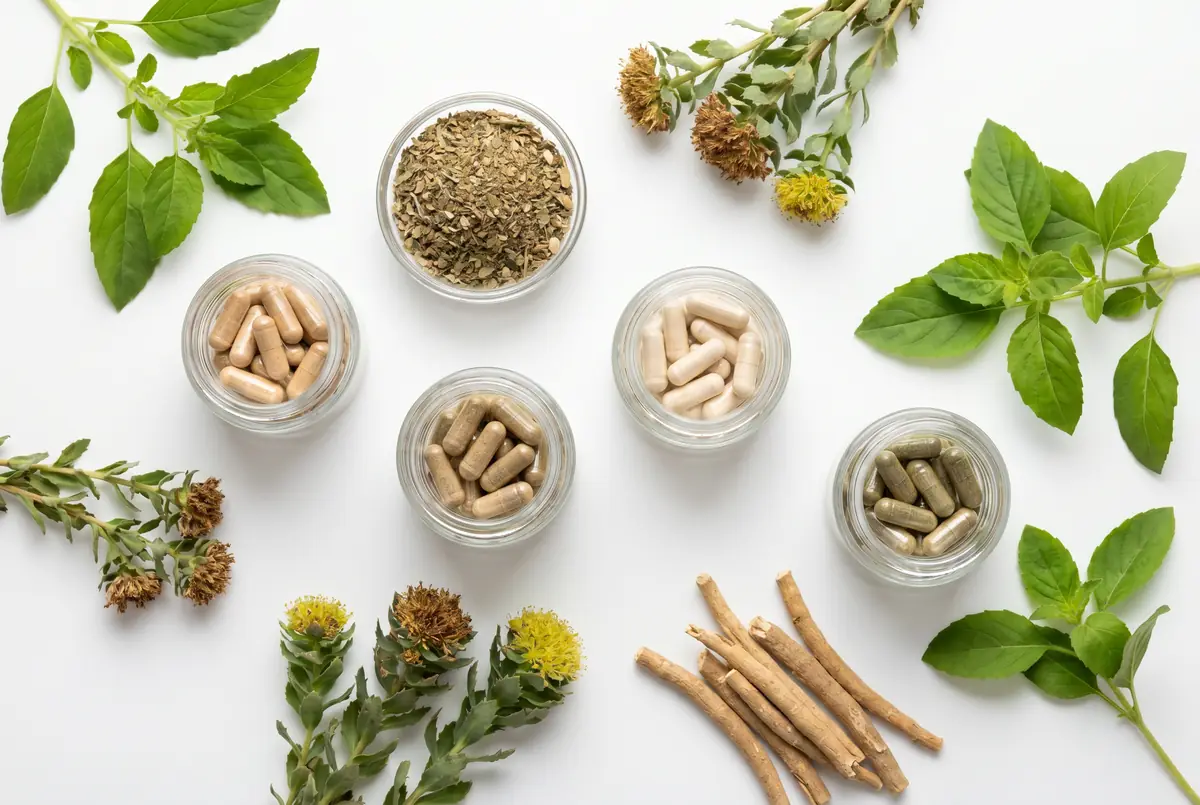
AdrenaCare contains ashwagandha root in its herbal blend. It also has rhodiola, schisandra, Siberian and Panax ginseng, L-theanine, zinc, and an adrenal glandular blend. That 2019 trial did not test AdrenaCare. Even so, AdrenaCare may help support a healthy stress response and normal adrenal function.
B vitamins are another piece. Your body uses vitamin B5 to make coenzyme A, which helps build adrenal hormones. Our Stress B Complex provides all eight B vitamins, plus choline, inositol and PABA. It may help support normal energy and a healthy response to stress.
Before you start any supplement for stress, talk with your doctor. This matters most if you are pregnant, nursing or taking medication. Herbs like ashwagandha and ginseng can interact with some drugs.
When High Cortisol Treatment Needs Your Doctor
Most high stress is a lifestyle problem. But sometimes cortisol stays high because of a medical condition. In that case, high cortisol treatment depends on the cause, and food alone is not enough.
Call your doctor if you notice fast weight gain in your face or belly. Also watch for purple stretch marks, easy bruising, muscle weakness or new high blood pressure. These signs call for testing, not a diet change.
Testing your cortisol level can be simple. Your doctor may use blood, saliva or urine. Saliva tests taken at several times a day show your daily rhythm. Then you and your doctor can decide on high cortisol treatment that fits your results.
At our clinic, we look at the whole person. You can learn about that approach on our holistic medicine page.
A Day of Calming Meals Built on Cortisol Reducing Foods
Here is how a calm day of eating might look. Think of it as a pattern, not a strict plan.
Breakfast: Oatmeal with pumpkin seeds, berries and a spoon of plain yogurt. Have your coffee with food, not on an empty stomach.
Lunch: A big salad with spinach, bell peppers, chickpeas and grilled salmon. Add olive oil and lemon.
Snack: An orange and a small handful of almonds. Or try green tea before 2 p.m.
Dinner: Baked chicken or lentils with roasted sweet potato and steamed broccoli. Then a square of dark chocolate if you like.
Every meal here includes cortisol reducing foods. Yet nothing on the list is hard to cook or hard to find.
Notice what is missing. There are no long gaps, no sugary drinks and no late coffee. Those small choices let cortisol reducing foods do their quiet work.
Nutrients That Work With Cortisol Reducing Foods
Some herbs also have a long history of use for stress. Ashwagandha is an herb from traditional Indian medicine. Rhodiola is a mountain plant used in Europe and Asia for fatigue. L-theanine, the calming compound in green tea, may help support relaxation without drowsiness. Zinc, found in oysters and pumpkin seeds, also supports normal adrenal function. Our AdrenaCare formula brings these together with adrenal glandular support. Talk with your doctor first, especially if you are pregnant or take medication.
Small Steps That Make Calming Meals a Habit
Food works best alongside other habits. So try to go to bed at the same time each night. Get morning light within an hour of waking. Move your body in a way you enjoy, and take short breaks to breathe.
Start with one change this week. For example, swap your afternoon soda for water and a piece of fruit. Next week, add fish to your dinner plan. Over time, these swaps make cortisol reducing foods feel like normal life.
You can also browse our adrenal support collection to see other products for stress. And if you want a full plan, the team at Taylor Medical Group can help.
References
- Lopresti AL, Smith SJ, Malvi H, Kodgule R. An investigation into the stress-relieving and pharmacological actions of an ashwagandha (Withania somnifera) extract: a randomized, double-blind, placebo-controlled study. Medicine (Baltimore). 2019;98(37):e17186. PubMed
Questions about which formula fits you?
Call 678-443-4099 or Chat Now to find out more information and pricing on our supplements.
Visit www.taylormedicalgroup.net to find out about holistic doctors that can improve your health.
The information in this article is provided for educational purposes only and does not constitute medical advice. These statements have not been evaluated by the Food and Drug Administration. Any products mentioned are not intended to diagnose, treat, cure, or prevent any disease. Always consult your qualified healthcare provider before making changes to your health regimen. Full Medical Disclaimer
Dr. Ava Bell-Taylor, M.D.
Board-Certified Psychiatrist & Functional Medicine Physician
Dr. Ava Bell-Taylor is a board-certified psychiatrist and functional medicine physician with a Family Practice background, specializing in hormone balance, reproductive psychiatry, adrenal health, and the mind-body connection. She is the co-founder of Taylor MD Formulations and Taylor Medical Group in Atlanta, Georgia.
Learn more about Dr. Bell-Taylor