Black cohosh is one of the best-known herbs for the menopause years. Still, many women ask me about black cohosh side effects before they try it. Others want to know if black cohosh tea is a gentler choice. Those are smart questions. Below, I cover the side effects and who should avoid it. I also explain how it fits in our LaiDex botanical menopause blend.
Natural does not always mean risk-free. So let's start with a simple question: what is black cohosh? Then we'll look at what the research says and how to use it wisely.
What Is Black Cohosh?
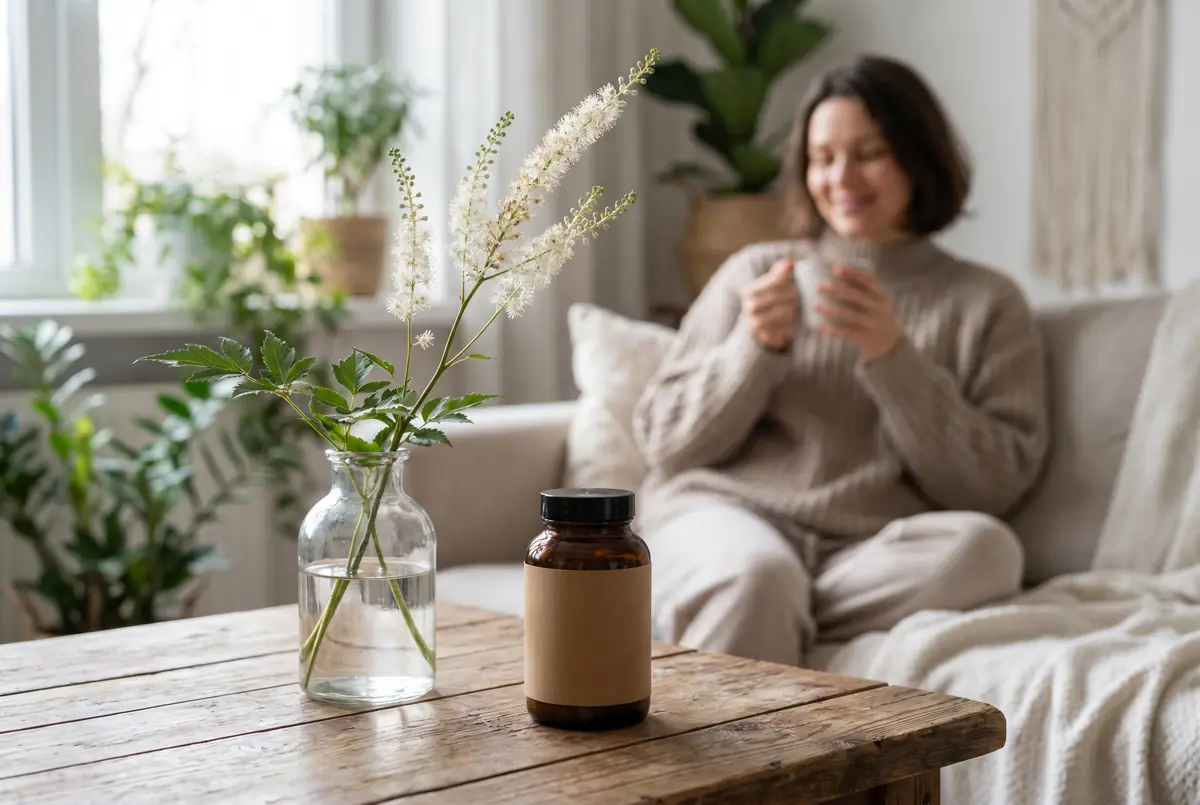
Before we get to black cohosh side effects, it helps to know the plant. Black cohosh is a flowering plant native to the woods of eastern North America. Its scientific name is Actaea racemosa, though older books call it Cimicifuga racemosa. It belongs to the buttercup family.
The part people use is the root. Native American healers used it for many purposes, including women's health. Later, European doctors adopted it as well. Today, most black cohosh products are made from dried root or root extract.
The black cohosh benefits women hope for usually center on comfort during perimenopause and menopause. Hot flashes, night sweats, sleep changes and mood swings are the usual reasons.
Black Cohosh Is Not Blue Cohosh
This point matters for safety. Blue cohosh is a different plant with a similar name. It has its own risks and is not a substitute. So always check the label for "black cohosh" and the name Actaea or Cimicifuga racemosa.
Common Black Cohosh Side Effects
For most adults, black cohosh side effects are uncommon and mild. The ones reported most often are:
- Upset stomach or other digestive discomfort.
- Headache.
- Skin rash.
Less often, people report dizziness or sweating. Some also report low blood pressure, mainly at high doses. A few people notice breast tenderness or a feeling of heaviness.
Many of these black cohosh side effects ease when you take the herb with food. If they do not, stop and talk with your doctor. Also stop if you notice anything new or unusual.
Black Cohosh Side Effects or Menopause Itself?
Here is a tricky part. Some black cohosh side effects look a lot like menopause symptoms. Headaches, tiredness, breast tenderness and stomach upset are all common in midlife. So how do you tell them apart?
Timing is your best clue. Write down how you feel for one week before you start. Then keep the same notes after you begin. If a new symptom shows up soon after starting, the herb may be the cause. On the other hand, an old symptom is less likely to be among black cohosh side effects.
Bring those notes to your doctor. Together, you can decide whether to stop, change the timing or keep going.
Black Cohosh and the Liver: A Rare Concern
Of all black cohosh side effects, liver injury worries doctors most. It is rare. Still, a small number of case reports describe liver damage in women taking black cohosh. Experts still debate whether the herb itself caused those cases. Product quality, other herbs or medications may have played a part.
Because of these reports, the U.S. Pharmacopeia recommends a liver warning on black cohosh labels. I take that warning seriously, and I want you to know it as well.
Black Cohosh Risks: Warning Signs to Watch For
Watch for these signs. If you notice any, stop black cohosh and call your doctor right away.
- Yellowing of your skin or the whites of your eyes.
- Dark urine or pale stools.
- Pain in the upper right side of your belly.
- Nausea, loss of appetite or unusual tiredness.
These signs need prompt care. They do not always mean liver trouble, but never ignore them.
Who Should Avoid Black Cohosh?
Black cohosh side effects are not the only issue to weigh. For some people, the herb is simply not a good fit. Talk with your doctor before using it if any of these apply to you.
Pregnancy and nursing. Black cohosh has a traditional link to starting labor. So it is not for use during pregnancy. It is also not advised while nursing.
Liver disease. If you have any liver condition, skip black cohosh unless your doctor says otherwise.
Aspirin sensitivity. Black cohosh contains compounds related to salicylates. People sensitive to aspirin should ask their doctor first.
Hormone-sensitive cancers. If you have had breast, uterine or ovarian cancer, talk with your oncologist first. This also matters for other herbs in menopause blends.
Medications. Few drug interactions are proven in people. Still, black cohosh may add to liver strain from other drugs that affect the liver. Lab studies also raise questions about some cancer drugs. So share your full medication list with your doctor.
Black Cohosh Benefits: What the Research Shows
I want to give you an honest picture. The research on black cohosh benefits is mixed.
A 2012 Cochrane review pooled 16 trials with 2,027 women [1]. The women took black cohosh by mouth for an average of 23 weeks [1]. In the trials that tracked hot flashes, black cohosh did not differ significantly from placebo [1]. The reviewers also found that safety data were too poorly reported to draw firm conclusions [1].
The authors called for more and better studies [1]. That is fair. Many women still report that black cohosh helps them feel more comfortable. But the science has not settled the question. So I see it as one tool, used with care, rather than a sure answer.
This is also why we review black cohosh side effects with every patient who asks about it. Knowing the limits helps you make a calm, informed choice.
Is Black Cohosh Tea a Safer Choice?
Black cohosh tea is made by simmering the dried root in water. Some women like it as a gentle ritual. However, a tea is not automatically safer than a capsule.
First, the root tastes bitter, so many people find black cohosh tea hard to drink. Second, the amount of plant compounds in each cup can vary a lot. That makes it hard to know how much you are taking. Third, tea does not remove the liver concern. So black cohosh side effects can happen with a cup, just as with a capsule.
If you prefer this herb as a tea, buy from a trusted source. Look for clear labeling that names the plant. And follow the same safety steps you would with any black cohosh product.
Questions to Ask Your Doctor
Before you start, a short talk with your doctor can save you trouble. Here are good questions to bring:
- Are black cohosh side effects more likely for me, given my health history?
- Do any of my medicines raise my liver risk?
- Should I get a liver test before I start?
- How will we know if it is working for me?
- Which black cohosh side effects mean I should stop right away?
Your doctor may also suggest other options. Diet, sleep, exercise and stress care all shape how you feel in the menopause years. So black cohosh, if you use it, works best as one part of a bigger plan.
How LaiDex Uses Black Cohosh
LaiDex is a botanical blend for the menopause transition. Black cohosh root extract is one of eleven herbs in its 1,256 mg blend. The others include red clover, sage leaf, dong quai, licorice root and chasteberry. Blessed thistle, red raspberry, soy isoflavones, wild yam and trans-resveratrol round it out.
LaiDex may help support comfort and hormone balance during perimenopause and menopause. Because black cohosh shares the blend with ten other herbs, the label does not list a separate amount for it.
A few label facts are worth knowing. LaiDex contains soy. Its capsule is bovine gelatin, so it is not vegetarian. The label also advises talking with your doctor if you take birth control pills or may become pregnant.
The research above looked at black cohosh, not at LaiDex. Also, black cohosh side effects can happen with any product that contains it. Do you have liver concerns or a history of hormone-sensitive cancer? Then talk with your doctor before trying any blend with black cohosh. You can compare other options in our women's health collection and our hormone support collection.
Other Herbs to Consider If You're Weighing Black Cohosh Side Effects
Women use several herbs during menopause. Red clover contains plant compounds called isoflavones that act a bit like mild estrogen. Sage leaf has a long history of use for sweating in Europe. Soy foods such as tofu and edamame also supply isoflavones. Chasteberry is a fruit women have used for centuries to support a normal cycle. Our LaiDex formula combines black cohosh with red clover, sage and other herbs. Because some of these herbs act on hormones, talk with your doctor before you start.
Smart Steps to Lower Your Risk
Say you and your doctor decide black cohosh is right for you. These steps help you use it safely.
- Tell every doctor and pharmacist that you take it.
- Ask whether a baseline liver blood test makes sense, especially if you drink alcohol or take other medicines.
- Follow the label dose. More is not better.
- Take it with food if your stomach is sensitive.
- Do not mix several black cohosh products, such as a capsule plus a tea.
- Stop and call your doctor if you notice any warning signs.
Your liver also does better with simple daily support. That means limiting alcohol, eating plenty of vegetables and staying well hydrated. Our liver and gut support collection has more on that topic.
Black cohosh side effects are usually mild, but the rare ones deserve respect. A doctor who knows your history can help you weigh the choice. To learn how we approach the menopause years, visit Taylor Medical Group or our page on Drs. Eldred and Ava Taylor.
References
- Leach MJ, Moore V. Black cohosh (Cimicifuga spp.) for menopausal symptoms. Cochrane Database of Systematic Reviews. 2012;(9):CD007244. PubMed
Questions about which formula fits you?
Call 678-443-4099 or Chat Now to find out more information and pricing on our supplements.
Visit www.taylormedicalgroup.net to find out about holistic doctors that can improve your health.
The information in this article is provided for educational purposes only and does not constitute medical advice. These statements have not been evaluated by the Food and Drug Administration. Any products mentioned are not intended to diagnose, treat, cure, or prevent any disease. Always consult your qualified healthcare provider before making changes to your health regimen. Full Medical Disclaimer
Dr. Ava Bell-Taylor, M.D.
Board-Certified Psychiatrist & Functional Medicine Physician
Dr. Ava Bell-Taylor is a board-certified psychiatrist and functional medicine physician with a Family Practice background, specializing in hormone balance, reproductive psychiatry, adrenal health, and the mind-body connection. She is the co-founder of Taylor MD Formulations and Taylor Medical Group in Atlanta, Georgia.
Learn more about Dr. Bell-Taylor